About Reflexology
What is Reflexology?
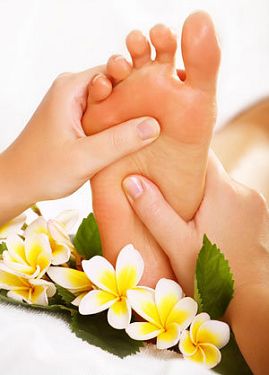
Reflexology is a complementary therapy based upon the principle that the entire body is represented by reflex points on the hands and the feet. A gentle pressure applied to these reflex points can stimulate a response in the corresponding part of the body encouraging it to function more efficiently.
A reflexology treatment can provide deep relaxation which helps the body to heal itself and enables it to restore and maintain its natural balance.
Reflexology is a holistic therapy, which means the whole person is being treated not just the symptoms of disease. If one area of the body is out of balance, then others will also be. Reflexology helps by stimulating the body's own healing process allowing the individual to achieve physical, emotional and spiritual well being. Reflexology is a gentle and non-invasive treatment which can be preventative as well as bringing relief from a wide range of acute and chronic conditions.
A reflexology treatment can provide deep relaxation which helps the body to heal itself and enables it to restore and maintain its natural balance.
Reflexology is a holistic therapy, which means the whole person is being treated not just the symptoms of disease. If one area of the body is out of balance, then others will also be. Reflexology helps by stimulating the body's own healing process allowing the individual to achieve physical, emotional and spiritual well being. Reflexology is a gentle and non-invasive treatment which can be preventative as well as bringing relief from a wide range of acute and chronic conditions.
The History of Reflexology
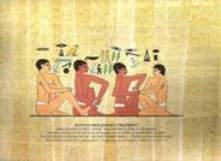
The Ancient healing art of Reflexology has its roots in ancient Egypt, China and India. The earliest known pictorial evidence was discovered in the Egyptian Tomb of the Royal Physician, Ankmahor, at Saqqara, Egypt. This dates back to around 2300BC. A picture of which can be seen opposite.
The Modern History of Reflexology dates back to the early 20th Century when an eminent American ear, nose and throat specialist, Dr William Fitzgerald first discovered the anaesthetising effects on various parts of the body when pressure was applied to certain areas of the hands and feet. Dr Fitzgerald developed an early form of Reflexology which he called 'Zone Therapy' in which the body was divided into 10 longitudinal zones. These zones are like segments of the body and run from the toes, up through the legs and body to the head and then down the arms to the fingers.
Dr Fitzgerald found that there was a flow of energy that linked the various parts of the body within a particular zone, and that areas within the same zone affect one another.
This 'Zone Therapy' was further developed by an American physiotherapist, Eunice Ingham who had been very interested in Dr Fitzgerald's work. Eunice Ingham realised that the ten zones could be accessed via the feet and hands, she concentrated on the feet and through her work she mapped reflex points for the entire body onto the feet.
She found that by applying pressure onto these 'reflex' areas a therapeutic effect on the corresponding part of the body in that zone was achieved. Eunice Ingham further developed 'Zone Therapy' into what is known as Reflexology today and she is often referred to as the 'Mother of Modern Reflexology', publishing her first book on the subject, 'Stories the feet can tell' in 1938.
Doreen Bayley trained under Eunice Ingham in America and brought Reflexology to the UK in 1966.
The Modern History of Reflexology dates back to the early 20th Century when an eminent American ear, nose and throat specialist, Dr William Fitzgerald first discovered the anaesthetising effects on various parts of the body when pressure was applied to certain areas of the hands and feet. Dr Fitzgerald developed an early form of Reflexology which he called 'Zone Therapy' in which the body was divided into 10 longitudinal zones. These zones are like segments of the body and run from the toes, up through the legs and body to the head and then down the arms to the fingers.
Dr Fitzgerald found that there was a flow of energy that linked the various parts of the body within a particular zone, and that areas within the same zone affect one another.
This 'Zone Therapy' was further developed by an American physiotherapist, Eunice Ingham who had been very interested in Dr Fitzgerald's work. Eunice Ingham realised that the ten zones could be accessed via the feet and hands, she concentrated on the feet and through her work she mapped reflex points for the entire body onto the feet.
She found that by applying pressure onto these 'reflex' areas a therapeutic effect on the corresponding part of the body in that zone was achieved. Eunice Ingham further developed 'Zone Therapy' into what is known as Reflexology today and she is often referred to as the 'Mother of Modern Reflexology', publishing her first book on the subject, 'Stories the feet can tell' in 1938.
Doreen Bayley trained under Eunice Ingham in America and brought Reflexology to the UK in 1966.
Who can have Reflexology?
Reflexology is a gentle, non-invasive therapy, which is suitable for almost anybody of any age from babies to the very elderly. Treatment may bring relief from a wide range of acute and chronic conditions.
The Benefits of Reflexology can include:
- Reduced stress levels
- A feeling of deep relaxation
- An increase in energy levels
Conditions which may benefit from ReflexologyReflexology is a complementary therapy which helps to heal the whole person, not just the prevailing symptoms. It can be used to help maintain the body's natural equilibrium.
There are many medical conditions which can be eased or alleviated with the application of Clinical Reflexology Treatment, however from March 2011 The Advertising Standards Authority remit now covers all information included on websites.
The Advertising Standards Authority(ASA)
The ASA's Code of Practice states that we can not include any of the positive results of Reflexology on our website which have not been conclusively proven with research and clinical trials; conducted in the format which the ASA consider acceptable.
Therefore we are not allowed to list conditions that have - in our experience - been helped or eradicated for many individuals by the treatment done on our own patients.
Much of the research that is available has been submitted to the ASA and rejected by them, and other research projects have sadly had to be abandoned before completion due to a lack of funding.
Unfortunately because reflexology is not a prescribed drug, clinical trials into its effectiveness would not result in a medication capable of producing huge profits, therefore funding into Reflexology research is very scarce.
If you would like to know whether any particular issues you have may be helped by reflexology then please do telephone for a discussion. We are always fair and objective when advising patients what results they are likely to achieve from our treatment. We regret that we can not provide you with helpful information in any other format at this time.
The Association of ReflexologistsThe Association was founded in 1984, arising from a need to establish standards and to provide a network of qualified practitioners that the public could refer to with confidence.
The Aim of the Association is to maintain a high standard of practice and patient care and to promote reflexology.
Members of the Association are bound by its code of practice and ethics.
To visit the Association of Reflexologisits website just CLICK HERE